Let's Get to Work
What is Community Employment?
Community Employment means having a job out in the community, just like everyone else. It means working for a business that hires all kinds of people, including people with and without disabilities. It also means you are not working in a program that is only for people with disabilities.
Understanding Your Potential: What is Community Employment?
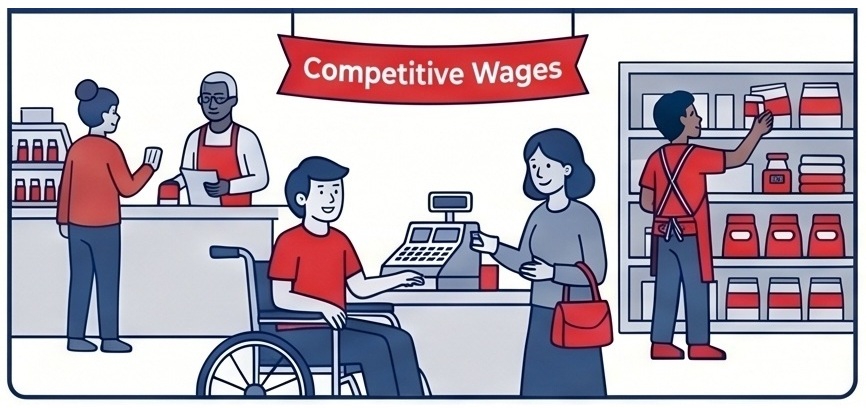
Working for a local business alongside people of all abilities for competitive wages.
When you have a community job, you will earn money for the work you do. You get paid the same as the other workers doing the same job. You will make at least minimum wage - and sometimes more. Some jobs also offer other kinds of benefits like paid days off and health insurance.
What is Community Employment
Real Jobs for Everyone

Working for businesses that hire all people, not just those with disabilities.
Equal Pay for Equal Work

You earn at least a minimum wage and the same pay as your coworkers.
Endless Possibilities

Roles range from offices and stores to restaurants or even starting your own business.
Where can people work in the community?
There are many kinds of jobs and places to work. Such as:
- Working in a store
- Helping in an office
- Cooking or helping customers in a restaurant
- Using computers, tools or machines
- Helping kids
- Cleaning or helping guests in a hotel
- Sorting and packing things in a factory
- You can even choose to be your own boss and start a business - this is called being “self-employed”
| Work Environment | Common Tasks |
|---|---|
| Retail & Service | Working in stores, hotels, or restaurants. |
| Business & Tech | Helping in offices or using computers and machines. |
| Production & Logistics | Sorting, packing, or working in a factory setting. |
When can people work?
Jobs can be:
- In the daytime or at night
- On weekdays or on weekends
- Full-time (all day)
- Part time (half days)
- Customized (maybe just a few hours or a few days a week)
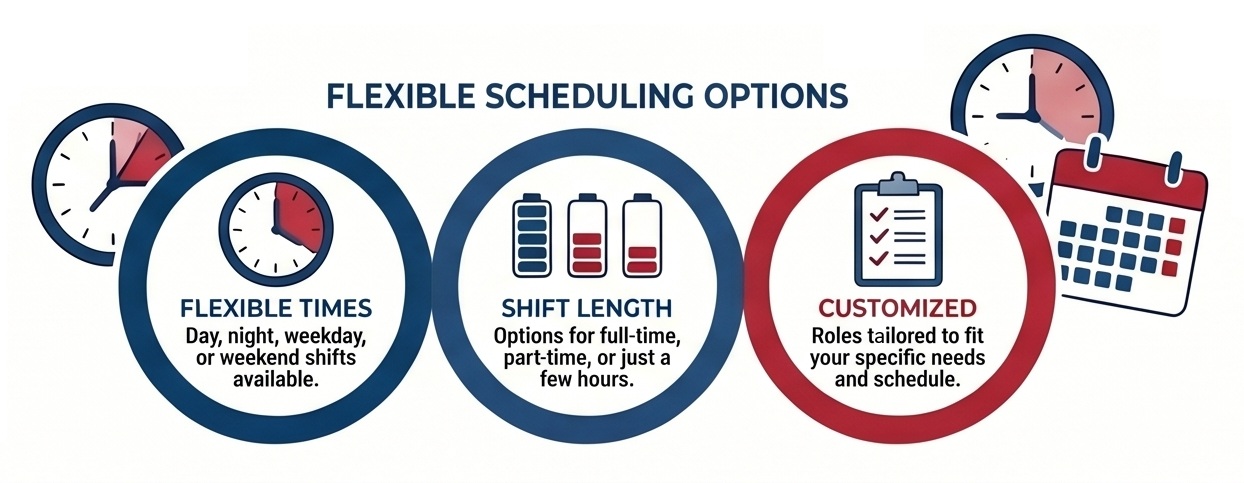
Flexible Times: Day, night, weekday, or weekend shifts available
Shift Length: Options for full-time, part-time, or just a few hours.
Customized: Roles tailored to fit your specific needs and schedule.
The best part?
There are many options, and you can decide what is best for you.

Meet Simon Ho
An administrative assistant at a downtown San Francisco law firm. Simon, who has autism, handles the firm’s mail, filing, and responds to requests from lawyers. These tasks play to many of his strengths. In the video below, we highlight how Simon found his ideal job through WorkLink, a program that enables people with intellectual and developmental disabilities (I/DD) to work.
The video, created with ODEP’s National Expansion of Employment Opportunities Network (NEON) initiative, explains how WorkLink used customized employment strategies to match Simon’s specific skills with the law firm’s needs. His coworkers say Simon’s contributions greatly improve office efficiency and productivity. “For PSA, they now have one of their most reliable employees,” says WorkLink program director Jeric Lake. “Simon doesn’t miss work. He doesn't come in late, and he loves his job.”
Let’s look closer!
Talk to your family and friends about the following questions:

What kind of job would you like to get?
What kind of jobs do your family members have? What about your friends?
How do you feel about working in the community?