Understanding SSD Benefits
Some individuals with disabilities have applied for and receive funds from the federal government to help with the cost of living in the community. The two main types of programs are Supplemental Security Income (SSI) or Social Security Disability Insurance (SSDI). They are both administered by the Social Security Administration but are very different. This job seekers guide has a module where you can learn more about these programs.
For transition age students, it is important to know that you can still work even if you receive SSI or SSDI. In fact, a person usually earns more money working in the community than they will just relying on the Social Security benefits.
There are a lot of myths and misunderstandings about Social Security programs. Luckily, there are experts called “benefits counselors” who can help you and your family better understand how employment will impact your benefits. Please see the map below for the benefits counseling agency in your area.
Take a look at the Benefits Planning module to find out more about benefits planning myths, recommendations, and services.
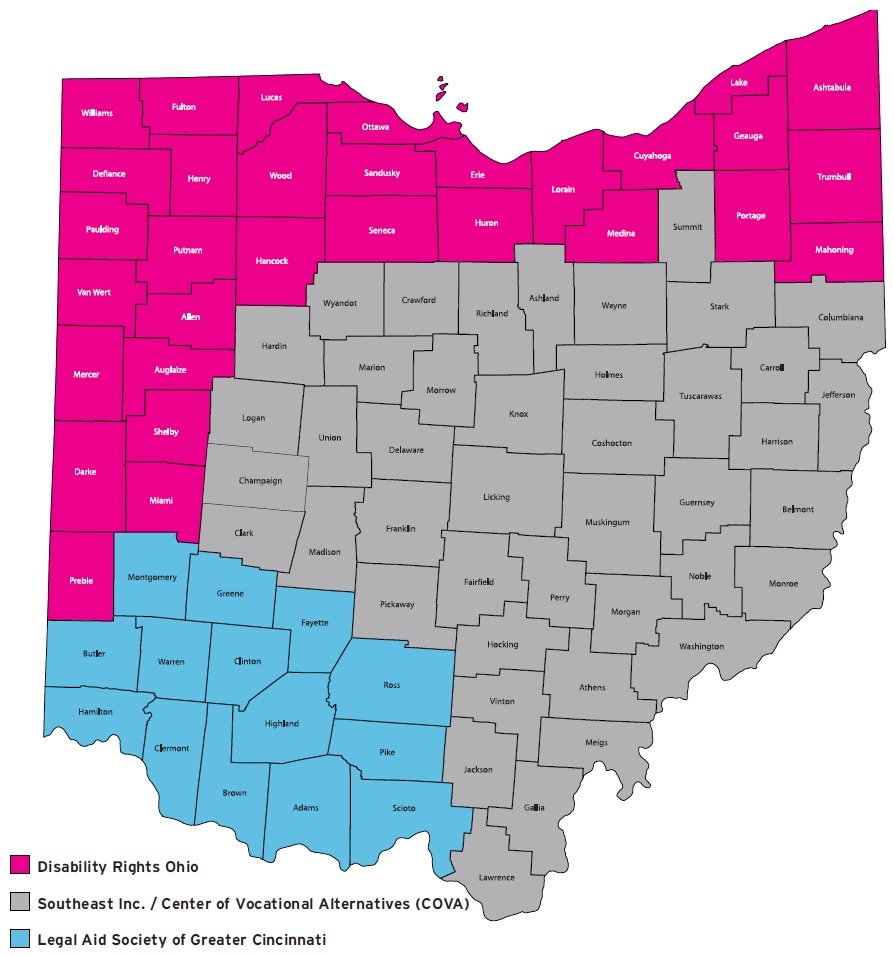
Legal Aid Society of Greater Cincinnati
215 E. 9th St., Suite 200
Cincinnati, OH 45202
513-241-9400 or
800-582-2682
Fax 513-241-0047
lascinti.org
Southeast Inc / COVA
3770 N. High Street
Columbus, OH 43214
(614) 294-7117 — voice
(614) 294-7443 — fax
www.cova.org
Disability Rights Ohio
200 Civic Center Drive, Suite 300 Columbus, OH 43215
614-466-7264 or
800-282-9181
disabilityrightsohio.org

Did you know
When SSI recipients turn 18 they will go through a “redetermination” process. This process decides if a person meets the adult criteria to continue to receive benefits. Families and students should be aware that receiving SSI as a youth does not mean you will receive it as an adult.

Students under the age of 22 who regularly attend school (high school or post-secondary education) can have a job and deduct a portion of their earnings from their countable income. This is called the Student Earned Income Exclusion (SEIE) and allows students to gain work experience without losing their SSI payments.
For more information, visit the SSA website’s What is the Student Earned Income Exclusion? Informational page.