Vocational Discovery: Welcome to Your Employment Journey
Discovery is a way to learn about yourself? - what’s important to you? - what do you enjoy doing? - What do you need to be at your best? All of these are important questions when considering the type of work you want.
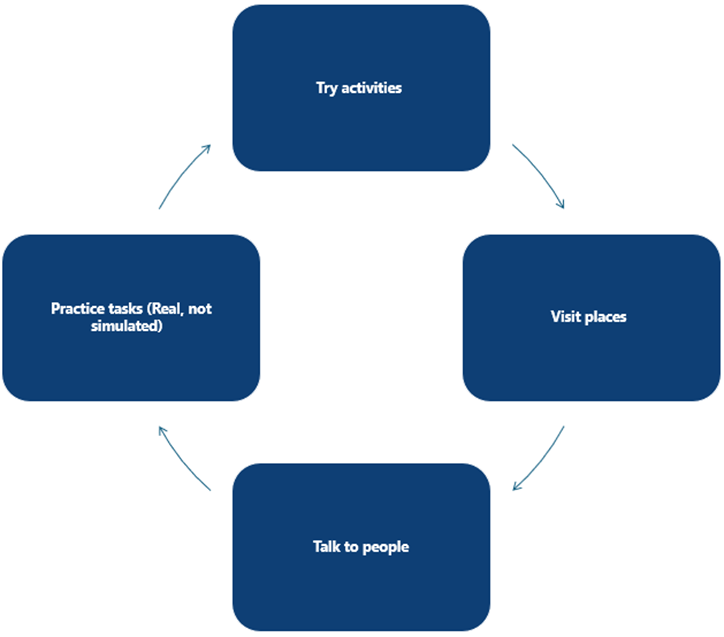
How it Works: Because Discovery is a highly active process, it doesn't involve just sitting in a program or filling out a long list of forms. Instead, you learn about yourself by engaging with your community. During this process, you will:
- Try new activities, and practice real, non-simulated tasks.
- Visit different places, including spaces where you already feel comfortable and new locations that interest you.
- Talk to people, such as family, friends, and businesses, to gather their observations about what you are good at and what environments might fit you best.
What Discovery is not:
- It is not a test that you can pass or fail.
- It is not someone else deciding for you what job you should have.
Discovery is Real Life

Not a Traditional Test

Discovery happens in real world settings rather than formal assessments or paperwork.
Ultimately, Discovery replaces traditional evaluations by collecting positive, real-world information to tell a story about who you are, which is then used to direct your search for a job that truly fits you.
For example, your discovery might include seeing you in spaces where you feel comfortable and it can be seeing you in new places that might interest you that you haven’t explored yet.
What happens during Discovery?
The Active Discovery Loop:

Activity
Try Discovery Yourself!
During Discovery, you will… Try activities, visit places, try new things at those places, talk to people you know and don’t know and practice real tasks. Not pretending or simulated.
If this is not possible to do in the current setting, instead try to think about places and activities that interest you. These should be tied to the interest areas and things learned in the earlier stage.
For example:
Alice likes to organize. She has her room organized using clear plastic containers, there is a method to her organization. She also has books about organizing on her shelf like The Home Edit. An activity for Alice to consider or reach out to might be a professional home organizing service or interior design firm.