Connecting With Others: They Don't Know You, Yet!
Talking to Businesses
After gathering insights from the people who know you best, the next step is to start looking for patterns in what you have learned. What keeps coming up? What themes stand out about your strengths, interests, and the way you work best? Once you have a sense of those themes, you can begin thinking about the kinds of businesses and jobs in your community where those same qualities show up every day. This is where your story starts to connect with the world of work.
In Discovery, we also connect by talking to people who work in businesses. This is called an informational interview. It is not a job interview—it is a chance to learn. You can ask people about what they do, what tasks are important in their job, and what they enjoy about their work. This helps you understand different kinds of work and what might be a good fit for you.
A Theme is Not a Job Description
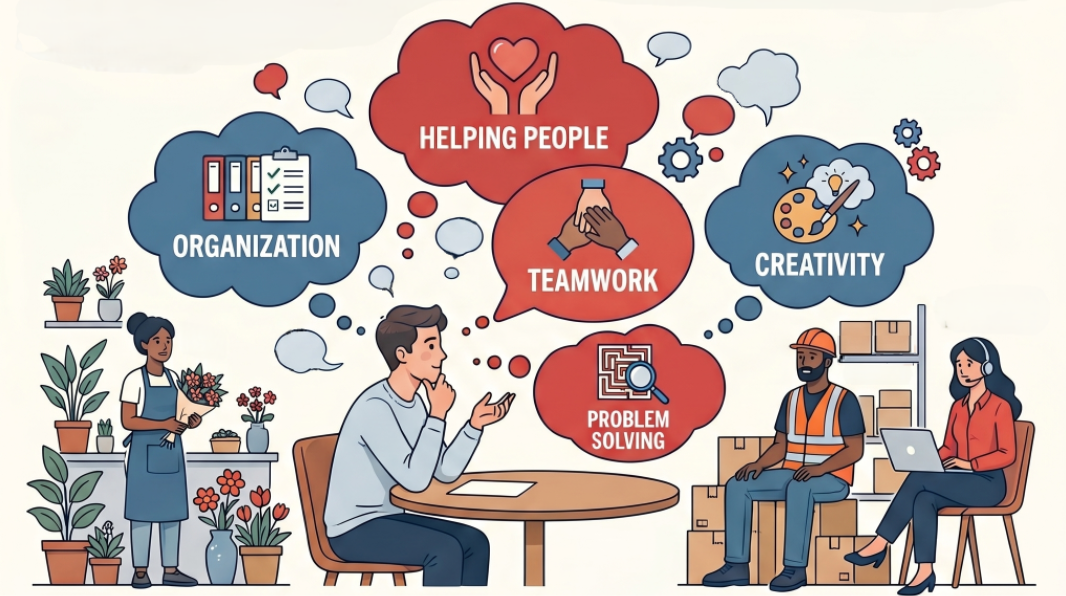
One of the most common questions a person can answer is: What do you do? When we talk to people about jobs they do and ask them what they enjoy about it, they often will not give you tasks that are on their job description but aspects of work that are most rewarding and often special to them.
As you talk with different businesses, pay attention to what stands out to you. What tasks sound interesting? What work environments feel right? After a few conversations, look for patterns.
For example, you might notice you are most interested in jobs where you help customers, organize materials, or work as part of a team. Try not to focus on specific job titles yet—focus on the themes or common ideas you are learning about the kind of work that fits you best.
Vocational themes are big ideas about the kind of work you like.
When we rely on job descriptions too early, it limits our thinking. Instead of trying to match to a standard job requirement, your individual theme helps translate natural strengths into powerful contributions. For example, shifting from a basic statement like "I like working with people" to a more meaningful theme like "I love creating spaces where people feel welcomed and heard".
Themes can also open up possibilities. If a person's theme is "Organization," you don't just look for a filing job description. Instead, you brainstorm real places in the community where people share that same passion for organizing, such as an interior design office, a professional organizing business, or a party planner's office.
By focusing on these overarching themes and the rewarding aspects of work, you will discover environments where will naturally thrive, rather than trying to fit into the narrow box of a traditional job description.
Connecting the information: As mentioned before, it’s important not to make the jump to thinking in job descriptions. Job descriptions are outlines of jobs that encompass many different skills and often when we compare ourselves to a job description we immediately think, “I’m not sure if I can do that” or “I’m not sure I meet those requirements.” The truth is companies are always hiring, you just have to be the right fit, help them make money and be successful.