Building a Support System: Who is on Your Team?
Remember, you do not have to navigate your employment journey alone. Building a career is easier when you have people who can support and guide you along the way. You may already be working with a teacher, employment specialist, counselor, or another professional who can help you explore careers, develop skills, and connect with employers.
If you have not yet connected with these resources, there are many free programs and services available to help you prepare for, find, and maintain employment.

The most appropriate service will depend on your individual needs and circumstances:
Visit an OhioMeansJobs Center. Every county in Ohio has one, offering resume assistance, skills training, and direct job placement. You can find your nearest location at OhioMeansJobs.com.
Individuals with Disabilities:
Opportunities for Ohioans with Disabilities (OOD) provides vocational rehabilitation and job coaching. You can browse OOD-approved providers, filter by location, and view provider success rates using the OOD Provider Search.
The Ohio Department of Developmental Disabilities (DODD) funds individualized employment support through county boards. Your service and support administrator (SSA) can authorize a certified employment provider to help you with job development. Learn more through Ohio Employment First.
The Ohio Department of Mental Health and Addiction Services (OhioMHAS) utilizes evidence-based supported employment (IPS) to help individuals with serious mental health conditions find and keep jobs. You can consult your local regional consultant by using the Ohio Department of Behavior Health’s IPS Providers Contact List.
When it comes to learning about yourself, sometimes the best insights come from the people who know you best. As part of the Discovery process, you are not expected to figure everything out on your own. Building a support team — made up of people who care about you and know you well — is one of the most important steps in finding the right job.
In this section, we will look at how to interview the people in your life so that their observations and perspectives can help paint a fuller, more accurate picture of who you are, what you are good at, and where you might thrive at work.
When it comes to building your team, you can choose people to support you, like:
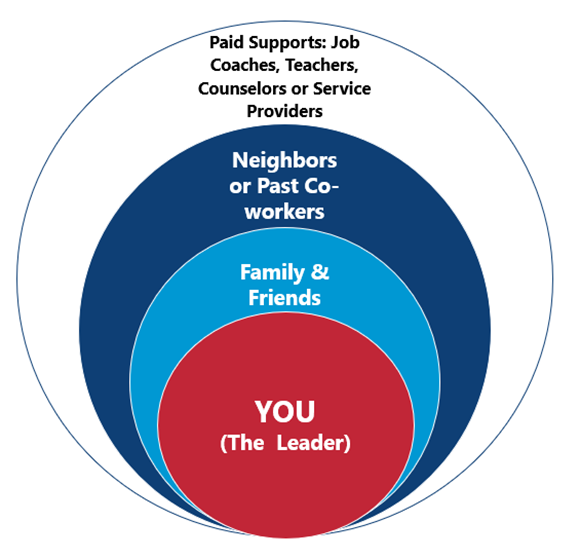
These people help you—but you are the leader.
Some people in your life may be paid to help you, like staff or service providers. They can be an important part of your team. It is also important to have people in your life who are not paid to be there, like friends, family, neighbors, or other people you trust. Having both kinds of support is an important part of life.
Your team can include many different people. It may also include other people with disabilities. What matters most is that the people on your team believe in you and want to support you.
Your team is not there to decide whether you should work. The goal is to help figure out what kind of job or work setting fits you best. Together, your team can help think about what environment feels right for you and how to support you in reaching your employment goal.
Connecting With Others Who Know You Well
Who are the people who love you most? Who else knows about your likes and dislikes? Has anyone ever said you would be good at something? We can often learn from those who care about us through their observations of us.
After collecting that information, are there themes or consistencies in the information you learned from your loved ones? For example, did they share that you are always connecting with other people? That you naturally greet others every Sunday at church, or that you love hosting parties? This might reflect that you are at your best when interacting with others and helping them feel welcome.
Who is on Your Team - Worksheet
- My Team Map
August 21, 2026 - Download